Table of Contents
Introduction
What is a Biceps Tendon Rupture?
How Do I Know if I’ve Injured My Biceps Tendon?
Common signs of a distal biceps tendon rupture include:
- A sudden, sharp pain in the front of the elbow
- A popping sensation at the moment of injury
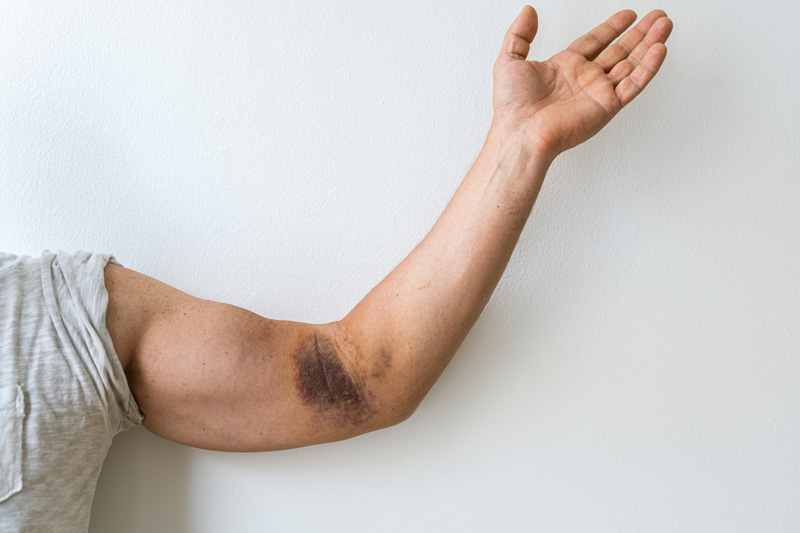
- Bruising or swelling around the elbow
- Weakness when bending the elbow or rotating the forearm (such as turning a doorknob or using a screwdriver)
- A visible change in the shape of the biceps
A physical exam and imaging, such as an MRI or ultrasound, help confirm the diagnosis.
Treatments for Biceps Tendon Rupture
Treatment depends on whether the tendon is partially or completely torn, as well as your activity level and goals. Options include:
- Non-surgical treatment for partial tears or for individuals with low activity demands. This may include rest, ice, anti-inflammatory medications, and physical therapy.
- Surgical repair for complete tears or for patients who need full strength for work, sports, or daily activities. Surgery reattaches the tendon to the bone to restore arm function.
Your provider will help determine the best approach based on your needs.
Do I Need Surgery?
Recovery and Rehabilitation
Recovery depends on the type of treatment received. After surgery, patients typically wear a brace or sling while the tendon heals. Physical therapy plays an essential role in gradually restoring motion, strength, and flexibility.
The orthopedic specialists at Premier Podiatry and Orthopedics will guide your rehabilitation and tailor your recovery plan so you can safely regain strength and return to your normal activities with confidence.
References
Miyamoto RG, Elser F, Millett PJ. Distal Biceps Tendon Injuries. J Bone Joint Surg Am. 2010;92(11):2128-2138. doi:10.2106/JBJS.I.01213.
Ramsey ML. Distal Biceps Tendon Injuries: Diagnosis and Management. J Am Acad Orthop Surg. 1999;7(3):199-207. doi:10.5435/00124635-199905000-00006.
Devereaux MW, ElMaraghy AW. Improving the Rapid and Reliable Diagnosis of Complete Distal Biceps Tendon Rupture: A Nuanced Approach to the Clinical Examination. Am J Sports Med. 2013;41(9):1998-2004. doi:10.1177/0363546513493383.
Looking to schedule an appointment with a physician?
Schedule an appointment with us by calling now or by clicking the button below to begin requesting your appointment today!