Lower Limb Deformities

Pediatric lower limb deformities can affect your child’s legs, feet, and overall mobility. Dr. Sheu is experienced in evaluating and treating these conditions to help your child improve strength, function, and confidence in everyday activities.
Lower Limb Deformities

Lower Limb Deformities

Office Hours

Monday
Tuesday
Wednesday
Thursday
Friday
Saturday
Sunday

Table of Contents

Introduction

Lower limb deformities in children can involve differences in length, alignment, or structure of the legs, feet, or toes. Some are present at birth, while others develop as a child grows. Early evaluation and treatment are important to ensure normal function, support growth, and prevent long-term complications.

Leg Length Differences

While over 80% of the population has a slight degree of limb-length inequality, some children may have one leg significantly shorter or longer than the other. Leg length differences can affect walking, running, posture, and balance. Monitoring growth and function is essential, and in some cases, corrective procedures may be needed.

Angular Deformities

Angular deformities occur when the thigh or shin bones grow at an abnormal angle, such as bowing or knock-knees. These differences can affect gait and overall leg function. Early evaluation helps determine the best treatment approach, which involves careful timing and advanced planning.

Torsional Deformities

Torsional deformities involve twisting of the thigh (femur) or shin (tibia) bones. These deformities can impact walking, running, and sports activities. Orthopedic specialists assess the severity of the deformity and recommend treatments to improve alignment and function.

High Arches

High arches can affect balance, foot stability, and walking. Custom orthotics, therapy, and sometimes surgical correction may be recommended to improve comfort and prevent complications.

Flat Feet

Flat feet, or fallen arches, can cause pain, fatigue, and altered gait. Treatment may include orthotics, stretching exercises, or in severe cases, surgery to restore the arch and improve long-term foot function.

Club Foot

Club foot is a congenital deformity in which the foot is twisted inward or downward. Early evaluation and treatment, often including stretching, casting, and sometimes surgery, are important to restore function and mobility.

Lesser Toe Deformities

Deformities affecting the smaller toes, such as hammer toes or overlapping toes, can impact walking and shoe fit. Treatment may include splints, physical therapy, or surgery, depending on severity.

Polydactyly (Extra Toes)

Polydactyly is the presence of extra toes. Extra toes can interfere with balance, walking, and shoe fit. Surgery is often performed to remove extra digits and improve function, typically when the child is young.

Treatment for Lower Limb Deformities

Treatment depends on the type and severity of the deformity and may include:

  • Observation and monitoring for mild deformities
  • Bracing, orthotics, or shoe modifications to guide growth or improve function
  • Physical therapy to strengthen muscles and improve coordination
  • Surgery to correct bone alignment, remove extra digits, or improve joint function

Does My Child Need Surgery?

Surgery is considered when the deformity significantly affects function, causes pain, or is unlikely to improve with non-surgical methods. Dr. Sheu uses specialized pediatric orthopedic techniques to correct deformities while minimizing the impact on growth and promoting long-term mobility.

Recovery and Rehabilitation

Recovery varies depending on the type of treatment or surgery. After treatment, your child may benefit from physical therapy to restore strength, flexibility, and coordination. Dr. Sheu and the team at Premier Podiatry and Orthopedics develop individualized rehabilitation plans to help your child regain independence, improve mobility, and participate fully in school, sports, and daily activities.

References

Saran N, Rathjen KE. Guided Growth for the Correction of Pediatric Lower Limb Angular Deformity. J Am Acad Orthop Surg. 2010;18(9):528-536. doi:10.5435/00124635-201009000-00004.

Tileston K, Baskar D, Frick SL. What Is New in Pediatric Orthopaedic Foot and Ankle. J Pediatr Orthop. 2022;42(5):e448-e452. doi:10.1097/BPO.0000000000002134.

Cady R, Hennessey TA, Schwend RM. Diagnosis and Treatment of Idiopathic Congenital Clubfoot. Pediatrics. 2022;149(2):e2021055555. doi:10.1542/peds.2021-055555.

Socci AR, Horn D, Fornari ED, et al. What’s New in Pediatric Limb Lengthening and Deformity Correction? J Pediatr Orthop. 2020;40(7):e598-e602. doi:10.1097/BPO.0000000000001456.

Friend L, Widmann RF. Advances in Management of Limb Length Discrepancy and Lower Limb Deformity. Curr Opin Pediatr. 2008;20(1):46-51. doi:10.1097/MOP.0b013e3282f35eeb.

Mooney JF. Lower Extremity Rotational and Angular Issues in Children. Pediatr Clin North Am. 2014;61(6):1175-1183. doi:10.1016/j.pcl.2014.08.006.

Looking to schedule an appointment with a physician?

Schedule an appointment with us by calling now or by clicking the button below to begin requesting your appointment today!
Other Services

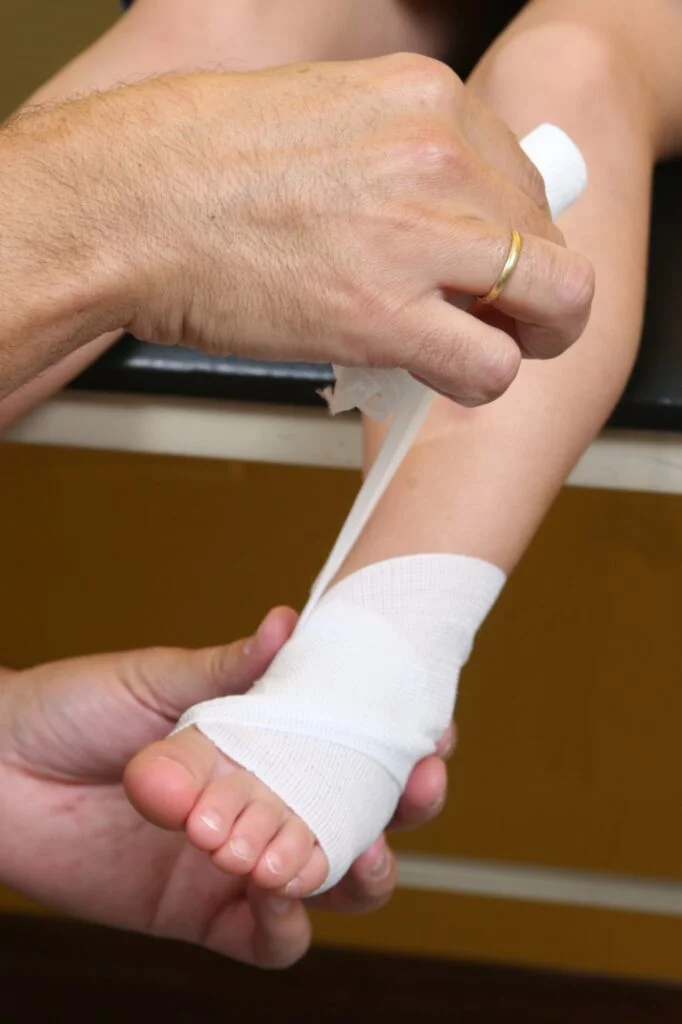
Doctor performing an ankle bandage on a girl