Table of Contents
Introduction
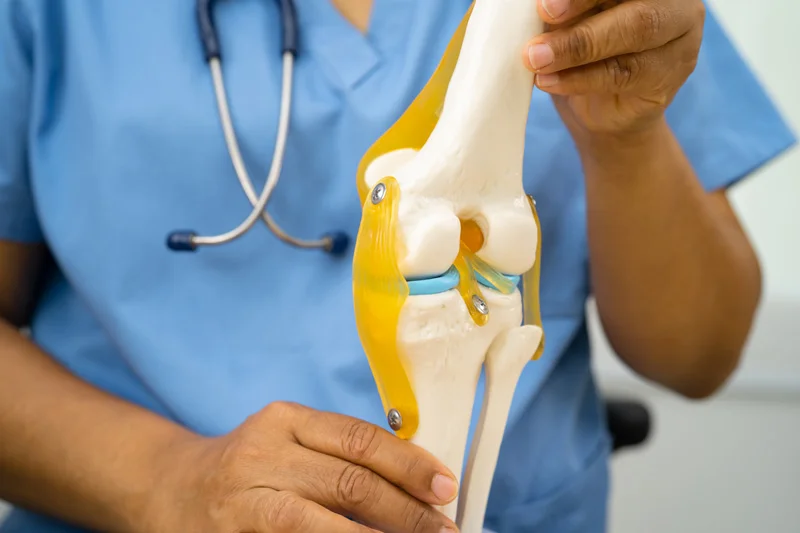
What Are the Ligaments of the Knee?
The knee has four major ligaments that keep the joint stable:
- Anterior Cruciate Ligament (ACL) which helps control forward movement of the shinbone
- Posterior Cruciate Ligament (PCL) which controls backward movement of the shinbone
- Medial Collateral Ligament (MCL) which supports the inner side of the knee
- Lateral Collateral Ligament (LCL) which supports the outer side of the knee
Injuries can affect one or more of these ligaments depending on the type of movement or force placed on the knee.
How Do I Know if I Have an ACL Tear?
Signs of an ACL tear often include:
- A popping sound or sensation at the time of injury
- Immediate swelling within a few hours
- Difficulty putting weight on the leg
- A feeling that the knee is giving out
- Pain with pivoting, twisting, or sudden movements
A physical exam and imaging, such as an MRI, are often used to confirm the diagnosis.
Treatments for ACL Injuries
ACL injuries can be treated with non-surgical or surgical options depending on your activity level, age, and lifestyle.
- Non-surgical treatment may include rest, bracing, physical therapy, and activity modification. This approach can work well for people who are less active or who do not participate in pivoting or jumping sports.
- Surgical treatment involves ACL reconstruction, which replaces the torn ligament with a graft. Surgery is often recommended for active individuals or those who experience knee instability.
Treatments for Other Ligament Injuries
Treatment depends on which ligament is injured and how severe the injury is.
- MCL and LCL injuries are often treated without surgery. Rest, bracing, physical therapy, and gradual return to activity are usually effective.
- PCL injuries may heal with structured rehabilitation, although severe tears may require surgery.
- Pain management, swelling control, and early guided movement are important for all ligament injuries.
Recovery Following Ligament Reconstruction Surgery
References
Brophy RH, Lowry KJ. American Academy of Orthopaedic Surgeons Clinical Practice Guideline Summary: Management of Anterior Cruciate Ligament Injuries. J Am Acad Orthop Surg. 2023;31(11):531-537. doi:10.5435/JAAOS-D-22-01020.
Bronstein RD, Schaffer JC. Physical Examination of Knee Ligament Injuries. J Am Acad Orthop Surg. 2017;25(4):280-287. doi:10.5435/JAAOS-D-15-00463.
Solomon DH, Simel DL, Bates DW, Katz JN, Schaffer JL. The Rational Clinical Examination. Does This Patient Have a Torn Meniscus or Ligament of the Knee? Value of the Physical Examination. JAMA. 2001;286(13):1610-1620. doi:10.1001/jama.286.13.1610.
Looking to schedule an appointment with a physician?
Schedule an appointment with us by calling now or by clicking the button below to begin requesting your appointment today!