

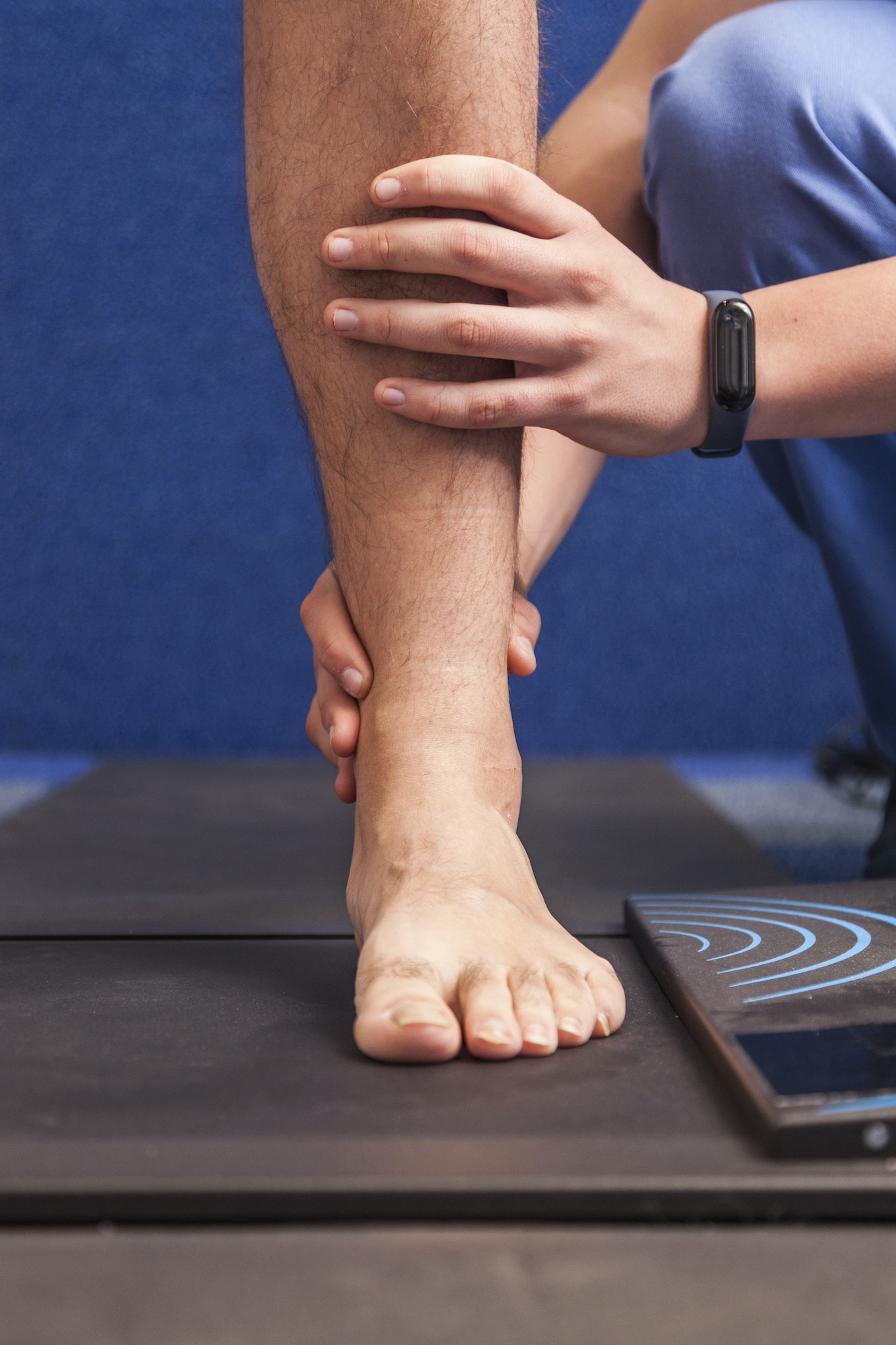
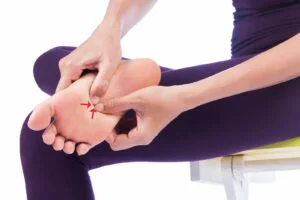
 If the object is small enough and sharp enough, when you step on it, the object may just remain superficial. This means that it has only penetrated the superficial layers of the skin and it does not look like it has gone deep. For example, you may have stepped outside on your wooden deck barefoot and a splinter may have entered the skin on the bottom of your foot. If so, you may be able to see the whole splinter and it may even be partially protruding from the skin. If this is the case, then you can take a pair of tweezers under good lighting and carefully remove it. However, sometimes the splinter or object may break off halfway while you are attempting to remove it. If this is the case, you can try soaking your foot in warm water and epsom salts for ten to fifteen minutes. Sometimes, the water may draw any the object to the surface. It this is the case, then you can again take a pair of tweezers and carefully grasp the end and remove the object. Most times, removing a superficial object goes fine. However there are some things to keep in mind. Only use the tweezers to remove the object if you can easily grasp it. Do not use anything sharp like a needle or a blade to try to “dig” it out. This can be dangerous and may have consequences. If you use a sharp object to dig around in the skin, you may be actually introducing bacteria into the area. If it is not superficial, your efforts to dig it out with a needle or blade may be of no avail because you could be pushing it deeper into the foot, or this could introduce bacteria and cause an infection. So complex treatments at home come with a caveat! Unless the object is superficial and very easily removed, home treatments can have consequences. Instead of home treatment in these cases, it is important to seek medical attention.
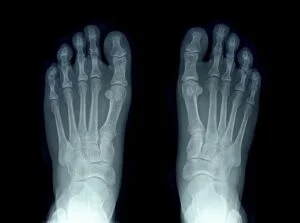 If you feel that you stepped on something and you may or may not be able to see it but you are definitely able to feel it with every step, then you need to seek medical attention. If it is a metal object or a dirty object that has gone deep, you must be sure that your are up to date on your tetanus vaccinations and may even need a booster from your PCP or the emergency room or urgent care. Tetanus is an illness caused by the clostridium bacteria and cause muscle weakness and stiffness in your jaw and neck muscles. If it is a piece of glass that you know probably is leftover from the glass that shattered in the kitchen and may have a stray piece in your foot, it is better to come to our office to have it checked. After a thorough history and lower extremity physical, it is important to take radiographs, or X-rays, of he affected foot.
The medical assistant will place a marker where the patient identifies the foreign body is located, and this marker will show up on X-ray, “marking” the affected site. An X-ray will be taken upon initial presentation, and if it is identified on the radiograph and removed, another one will be taken to show evidence of its absence. Not all objects will show up on the X-ray, but it is important to take an X-ray either way just in case. If it is easily removed, then this can be done in the office with the proper instruments such as a magnifying glass and stand with lighting. If it is deeper, then you may have to undergo numbing of the area in order for the doctor to use sharper instruments and to dig deeper without pain. You may be placed on an oral antibiotic depending on the circumstances and appearance of the wound. In some cases, if the foreign object is too deep into the skin to visualize, then you may have to be scheduled for an outpatient procedure performed a different day where this would entail more complex process. This may entail going to the operating room under anesthesia to have the foot prepped under sterile conditions to have it removed. This is not common, and most of the time the object is removed in the office.
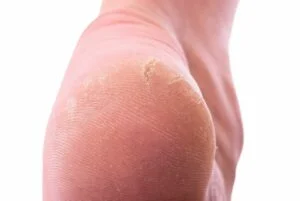 Believe it or not, sometimes patients come in and they swear up and down and they stepped on something. However upon exmination of the foot, there is no break in skin or entry point, and there is no foreign body to be seen. Instead, the doctor identifies a porokeratosis, or a clogged sweat gland, which is actually thickened skin that is pinpoint and originates so deeply that it FEELS as if there is a small piece of glass in the foot. The doctor will use a sterile 15 blade to reduce this hyperkeratotic buildup of skin, and recommend ways to prevent its recurrence so it does not mimic that feeling of “walking on a foreign object” again!
How do you prevent this from recurring? The answer is – don’t go barefoot! Especially if you are a diabetic patient, it is best to always wear protective slippers at least. Diabetic patients may have decreased sensation in the feet due to diabetic neuropathy so if a diabetic patient does step in an object, they may not feel it! This of course could hae devastating consequences. But if you happen to be barefoot and you step on something, beware of what it may be and how to treat it.